


Weight Loss Programmes in Singapore: 5 Options and How to Choose
Learn more

Slimming

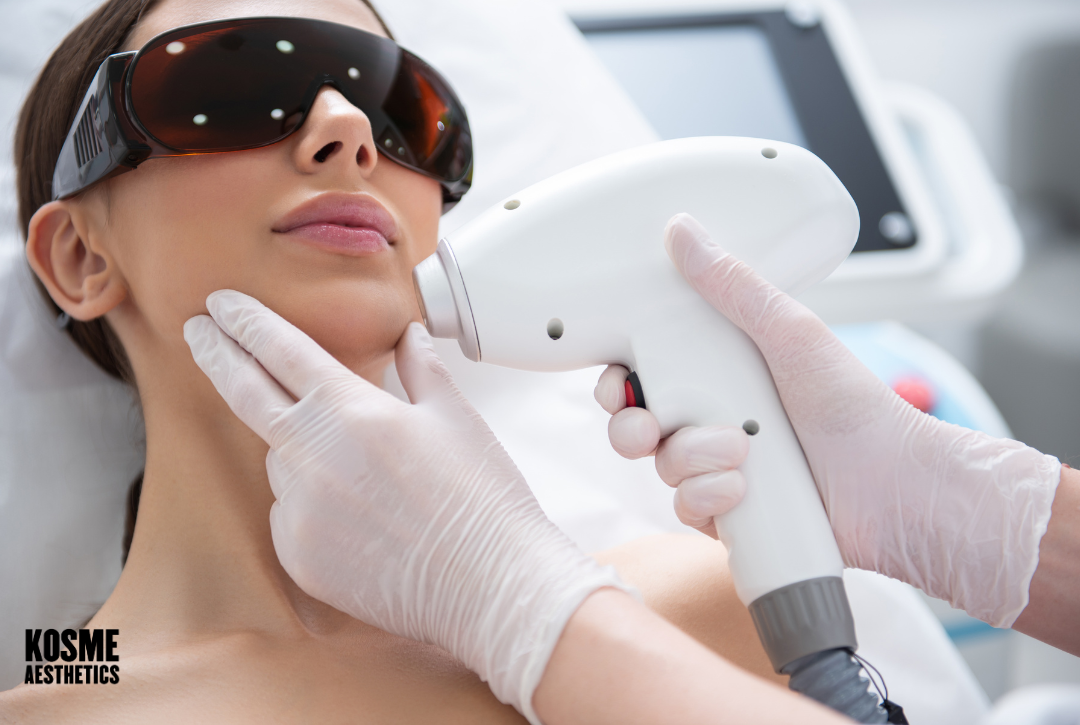
A double chin refers to visible fullness beneath the chin, in the area known as the submental region. It may be caused by localised fat, reduced skin elasticity, genetics, ageing or a combination of factors.
The most suitable treatment therefore depends on what is contributing to the appearance. Fat-reduction treatments target submental fat, while skin-tightening treatments may be more relevant when loose skin contributes to the jawline or neck. Surgical procedures may address larger amounts of fat, loose skin or both.
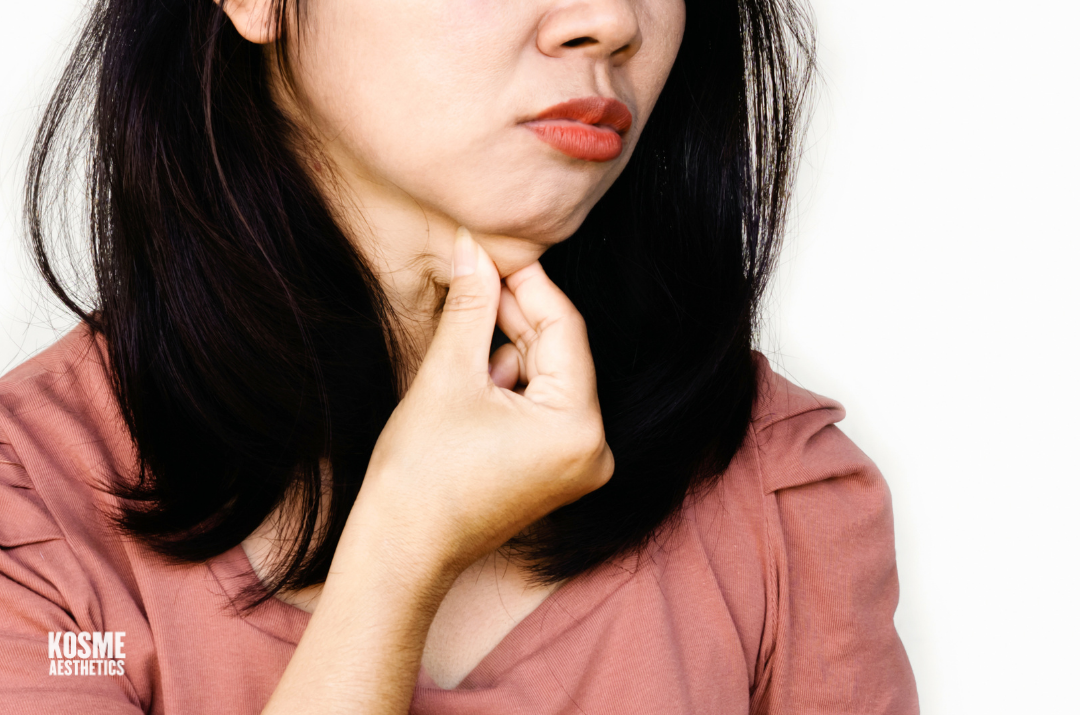
A double chin does not always mean that someone is overweight.
Common factors that can contribute to fullness beneath the chin include:
Some people may have localised submental fat even when they are otherwise at a stable weight. Skin quality also matters because removing fat alone may not fully address the appearance if significant loose skin is present.
There are non-surgical treatments that may reduce the appearance of a double chin, but they do not all work in the same way.
Some treatments are designed to reduce localised fat, while others mainly aim to improve skin firmness or laxity.
The right option depends on whether the fullness beneath your chin is caused mainly by fat, loose skin or both.
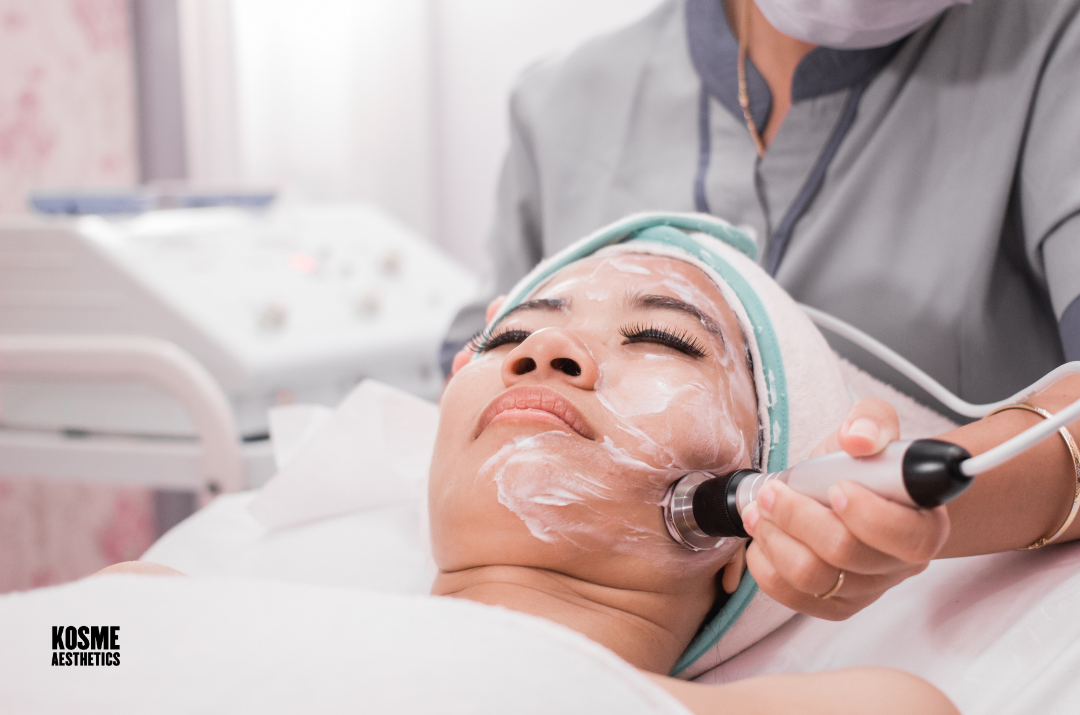
Radiofrequency (RF) treatments use controlled electromagnetic energy to heat tissue beneath the skin.
Depending on the device and treatment settings, RF may support collagen remodelling and improve the appearance of mild skin laxity or firmness. Some RF body-contouring devices may also affect the fat layer, but these effects depend on the specific technology and its intended use.
For someone whose double-chin appearance is caused mainly by loose or less-firm skin, RF may therefore be more relevant than when a larger pocket of submental fat is the main concern.
Possible temporary effects can include warmth, redness, or discomfort. Risks and expected results vary between people.
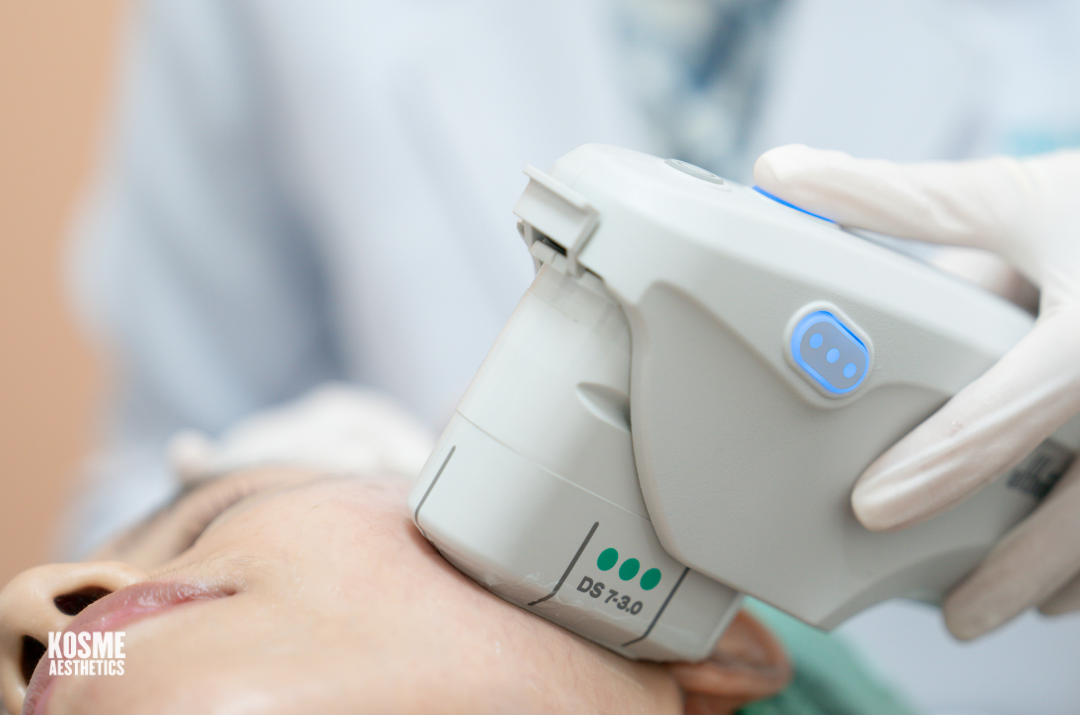
Ultherapy uses microfocused ultrasound energy to stimulate tissue remodelling beneath the skin.
The Ulthera System is FDA-cleared to lift tissue on the neck and beneath the chin. It is therefore primarily a skin-lifting and tightening treatment, rather than a treatment specifically designed to remove submental fat.
Ultherapy may be more relevant when lax or sagging tissue contributes to the appearance of the lower face and neck.
Possible temporary effects reported in clinical trials include redness, swelling, pain and transient nerve effects.
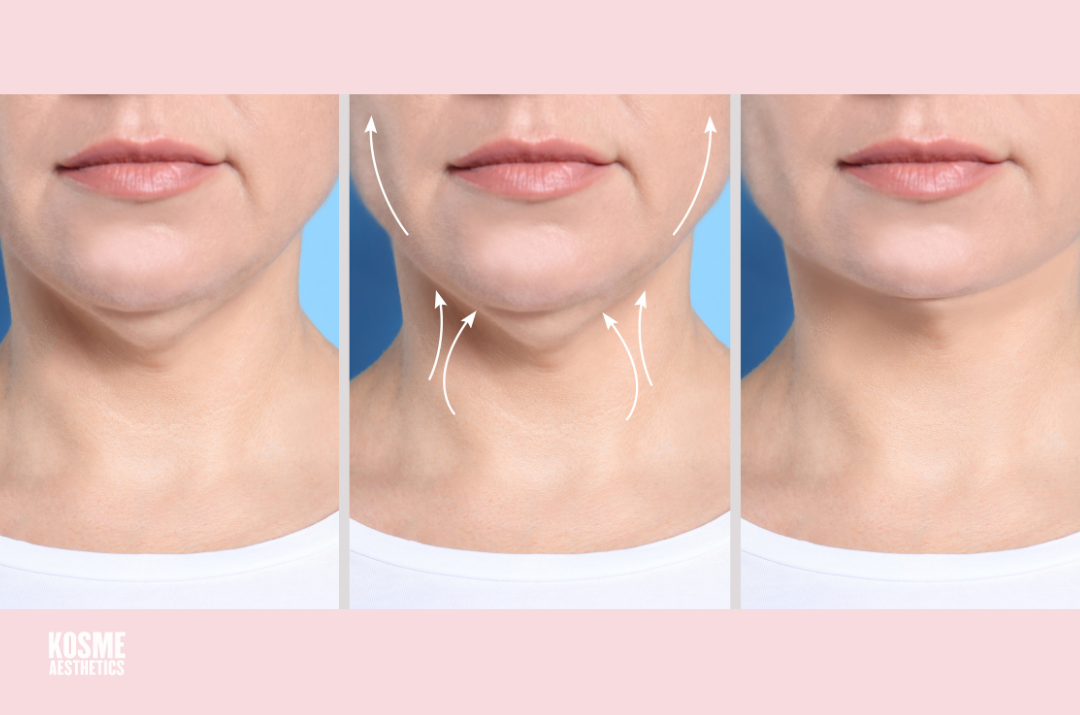
For people seeking a more substantial structural change, surgical options may be considered.
Surgical treatments generally involve more recovery and procedural risk than non-surgical treatments, but they can directly remove fat or loose tissue depending on the procedure.
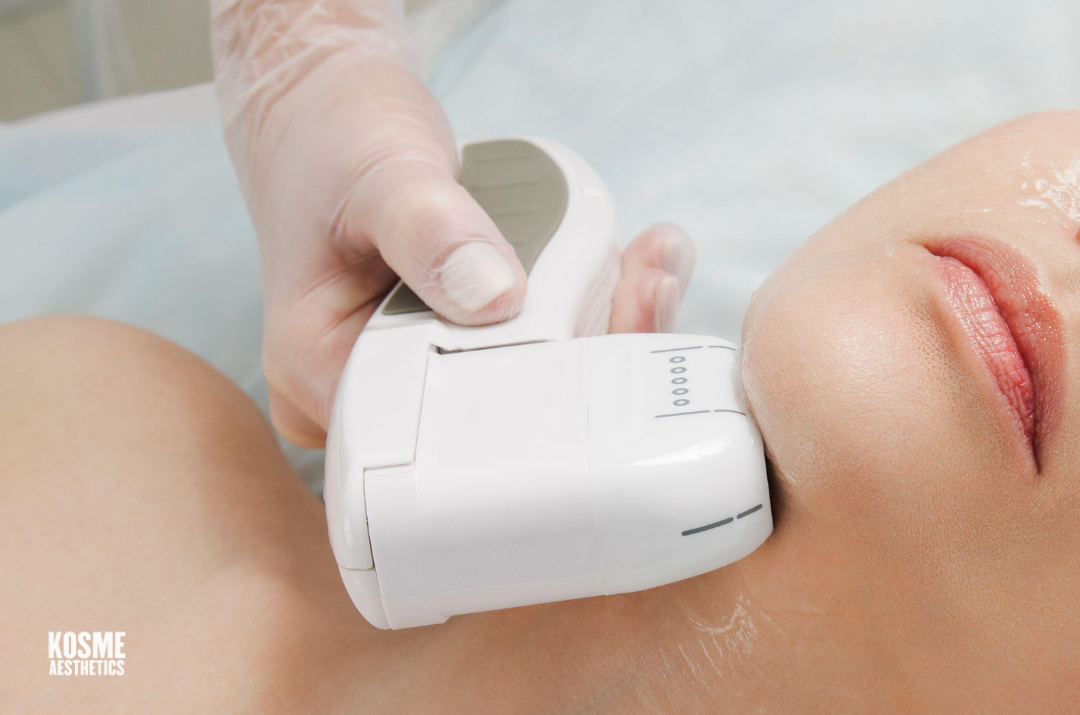
Submental liposuction is liposuction performed beneath the chin or around the neck.
During liposuction, a thin hollow tube called a cannula is inserted through small incisions and used to suction out localised fat. The face, chin and neck are among the areas that can be treated with liposuction.
Unlike non-surgical treatments that gradually reduce fat, liposuction physically removes fat during the procedure.
However, it is still surgery and involves incisions, swelling, bruising and recovery. The final contour also depends on skin elasticity. If the skin is significantly loose, removing fat alone may not produce the desired result.
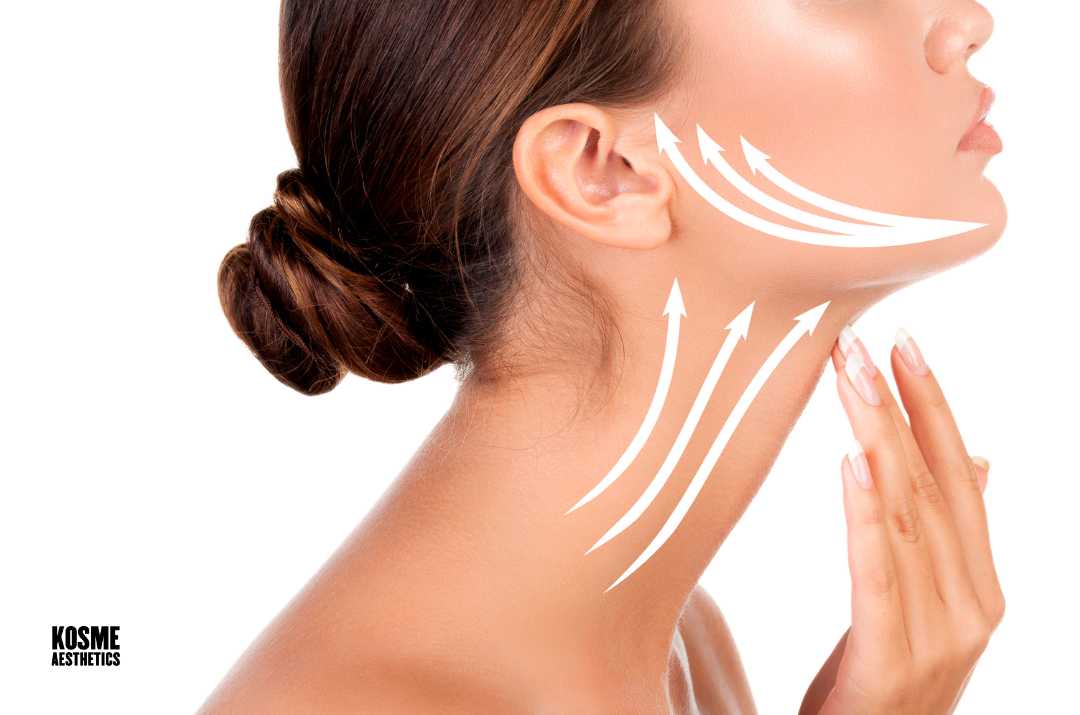
A neck lift is a surgical procedure designed to improve visible signs of ageing in the jawline and neck.
Depending on the individual, it may address:
The procedure can involve repositioning underlying tissues, tightening the platysma muscle, removing excess skin and, in some cases, liposuction beneath the chin.
Because it is surgery, a neck lift involves anaesthesia, incisions and a longer recovery period than non-surgical treatments.
The cost of double-chin treatment in Singapore can vary considerably depending on:
When comparing prices, check the treatment area covered, number of sessions or applicators included, cost of additional treatments and whether consultation or medical fees are charged separately.
Prices and promotions can change, so always confirm the latest treatment price and inclusions directly with the provider before booking.
There is no single best treatment for every double chin.
The right treatment depends mainly on whether the area contains localised fat, loose skin or both. Localised fat may be more suited to fat-reduction treatments, while skin laxity may require a tightening treatment. A professional assessment can help determine which approach is more appropriate.
A qualified practitioner can assess the area and explain what a treatment can and cannot realistically address.
Key Takeaways

